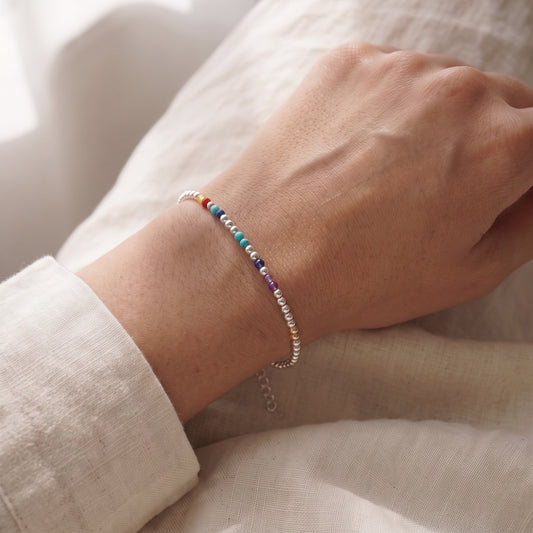
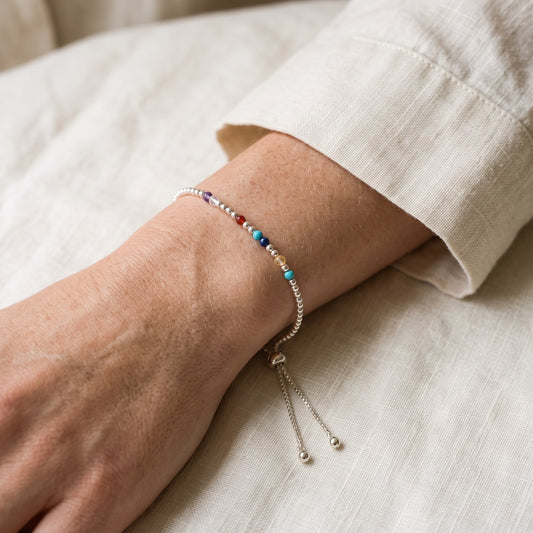
Pick up almost any DesigNA necklace or bracelet and look at the extender end. The first stone is nearly always yellow. That stone is citrine, and it sits there for a reason that has nothing to do with taste. Most citrine jewellery earns its place through warmth and colour. On a DesigNA piece it earns it because of a marker called D2S441. So this post explains the stone, what tradition says about it, and why your DNA puts it first.
What citrine is
Citrine is quartz. Traces of iron give it a colour that runs from pale lemon to deep honey, as the GIA's guide to citrine explains. Because it is quartz, citrine is a close relative of amethyst, the purple stone at the other end of your strand. The two share a structure and differ mainly in colour.
Ours is natural, never lab grown or imitation, and it comes from established UK suppliers.
What citrine means
Tradition links citrine with optimism. People have worn it as a sunny stone, a reminder to look forward rather than back. We pass that on as a belief, not a fact, because a stone cannot change your mood. However, there is something pleasing about a stone of optimism opening the strand.
Citrine jewellery with a job to do
On a DesigNA piece, citrine is a marker before it is anything else.
First, a UK laboratory with over 25 years in genetic testing reads 23 identity markers from your cheek swab. The machine tags those markers in five fluorescent dye colours so it can tell them apart: blue, green, yellow, red and purple. Each marker has two values, one from each parent. Then every value becomes a stone in that dye's colour, placed along the strand by fragment size, from the smallest to the largest. See how DesigNA works for the full process.
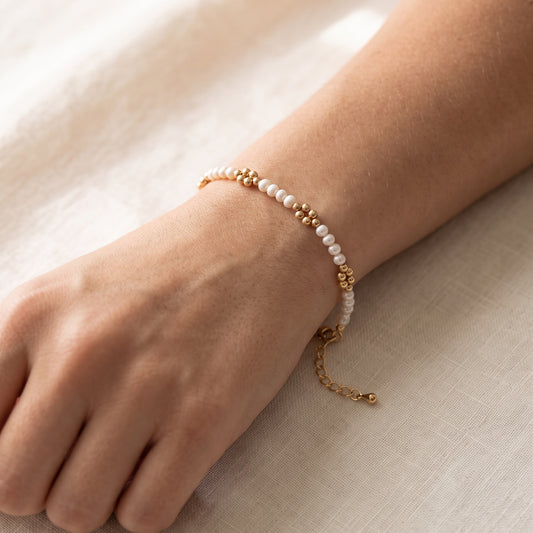
So every value the machine reads in the yellow dye channel becomes a citrine. Citrine takes the yellow role on every piece that carries stones, at 4mm on necklaces and twisted bracelets and at 2mm on the fine spider and clasp bracelets. Pattern and "and gold" pieces carry no stones; a gold filled sphere marks every position instead. The semi precious stones page shows the full palette.
Why citrine opens the strand
Here is the part most people find surprising. The order of the stones is not a design choice. It follows fragment size, measured in base pairs, and the kit our laboratory uses fixes which markers it reads.
The strand runs from the extender chain towards the clasp, smallest fragment first. In the kit our laboratory uses, a marker called D2S441 almost always carries the smallest fragment, and the machine reads it in the yellow channel. As a result, the first stone on almost every DesigNA piece is a citrine.
This is a kit fact, true for every customer. Only the values differ, so your two D2S441 values belong to you alone, but the colour that opens the strand stays the same for everyone. At the other end, Penta D carries the largest fragment and always closes the piece in amethyst. Yellow opens, purple closes, and everything between follows your DNA.
The Pearl DNA Profile Necklace
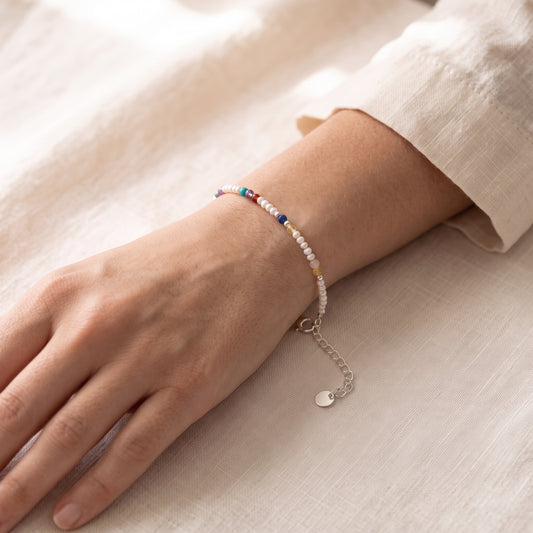
Citrine looks especially warm against pearls, so we end on the Pearl DNA Profile Necklace, £275. Genuine 6mm freshwater pearls run the length of the strand, slightly off round because that is how natural pearls grow, with your markers set between them as 4mm natural stones and a 925 silver spacer either side of each stone. Citrine marks every yellow dye value, usually opening the strand at the extender end, with lapis lazuli, garnet, amethyst and amazonite for the rest. One silver lobster clasp and a 2 inch extender finish it, in 16, 18 or 20 inches, and it arrives in the black DesigNA box with your signed certificate on top, free by UK tracked post. Keep perfume and chlorine away from the pearls, and clean the piece with warm water and a soft cloth. Our pearl DNA necklace post has more.
Frequently asked questions
Is citrine a real gemstone?
Yes. Citrine is natural quartz that owes its yellow to traces of iron, and ours comes from established UK suppliers. We never use lab grown or imitation stones.
Why is the first stone on my piece yellow?
Because of D2S441. In the kit our laboratory uses, that marker almost always carries the smallest fragment, the machine reads it in the yellow channel, and the strand runs from the smallest fragment to the largest. So a citrine usually sits first, at the extender end.
Does every piece start with citrine?
Almost every piece that carries stones, because the order follows fragment size and D2S441 is nearly always the smallest. Pattern and "and gold" pieces carry gold filled spheres at every position instead of stones.
Can I choose a different first stone?
No. The palette stays the same for everyone, and every marker appears in its dye colour in the exact order your DNA places it. That order is what makes the piece one of one.
How do I care for citrine jewellery?
Warm water and a soft cloth. Never use an ultrasonic cleaner, keep perfume away from any pearls, and store the piece flat in its box.
Ready to see which stone opens yours? Explore the full DesigNA collection.
Your genetic code, profiled from a simple cheek swab and handcrafted into the exact DesigNA necklace. No two are ever the same.
Shop the collection