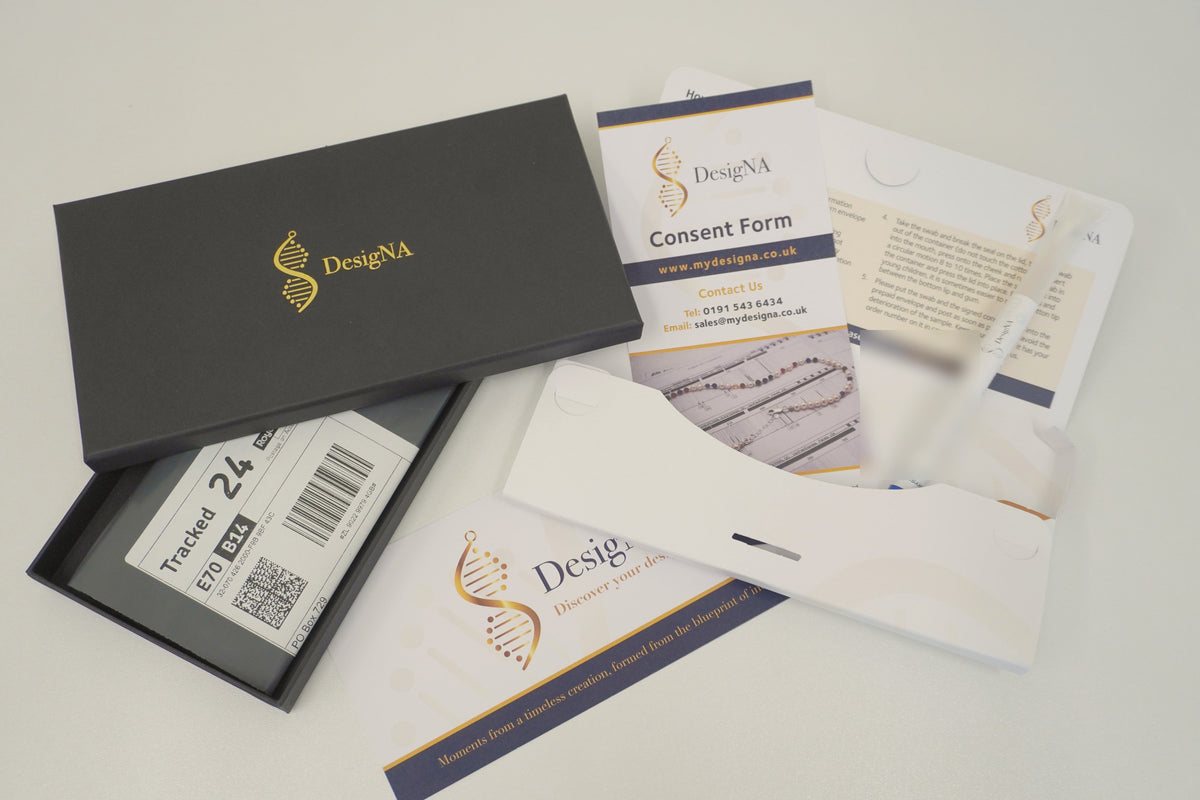
Every DesigNA piece begins with two quiet minutes at home. You open the kit, run a sterile swab around the inside of your cheek, seal it, and post it back. People often ask how much cheek swab DNA that actually collects. Can such a small sample really be enough? The short answer is yes, comfortably. This post explains why, what the laboratory does with it, and why you will never see a needle.
Why the cheek, and why cheek swab DNA is enough
Start with the cell. Almost every cell in your body carries a full copy of your DNA. Wellcome's yourgenome site explains what DNA is in plain terms. In short, DNA is a long molecule in four chemical letters, folded inside the nucleus of the cell. The inside of your cheek sheds cells all the time. So a swab lifts a small number of them with no effort on your part.
Each of those cells holds the whole set. That is the point. The laboratory does not need a lot of cells, because the information it wants sits complete in every one. So a swab that feels like nothing gives the laboratory everything it needs to read the 23 markers.
What a genome is, and how little of it we read
Your genome means all of your DNA. yourgenome describes it as the complete instruction set for building and running you. However, a DesigNA piece never reads the genome. It reads 23 Short Tandem Repeat markers, the same identity markers a UK laboratory uses for identity and paternity testing.
That distinction matters for two reasons. First, the laboratory needs only a tiny amount of DNA to read a fixed set of markers. So a cheek swab is plenty. Second, the result is a list of repeat counts. It says nothing about health, ancestry, appearance or disease, because identity markers do not describe those things. The profile says who, never what.
Why no blood and no needle
A cheek swab gives the laboratory the same DNA that blood would, with no clinic, nurse or needle. The swab is sterile and it goes in the mouth for under two minutes. The whole thing happens at your kitchen table. Then it goes into the prepaid envelope, and the post does the rest.
There is a second reason we chose the swab. An adult always takes their own sample, with their own consent, and a swab makes that easy to do alone. You cannot take one for another adult, because analysing an adult's DNA without consent is an offence under the Human Tissue Act 2004. A child's piece is possible when a parent or guardian with parental responsibility gives written consent first. Our consent page sets this out.
What happens to the swab afterwards
Here is the part people care about most, in order. The laboratory, Complement Genomics, has over 25 years in genetic testing. It extracts the DNA from the cells on the swab. Next, it reads the 23 markers by capillary electrophoresis and records two values for each one. Then it destroys the sample. The swab does not sit in a freezer somewhere; once the profile exists, the physical sample is gone.
We treat the profile with the same care. Genetic data is special category data under UK GDPR. So we ask for explicit consent on the form in the kit. We delete the marker data after your piece arrives. You can also ask for deletion at any time by emailing sales@mydesigna.co.uk. We never sell or share it. The full detail sits on our DNA and privacy page.
From the swab to the strand
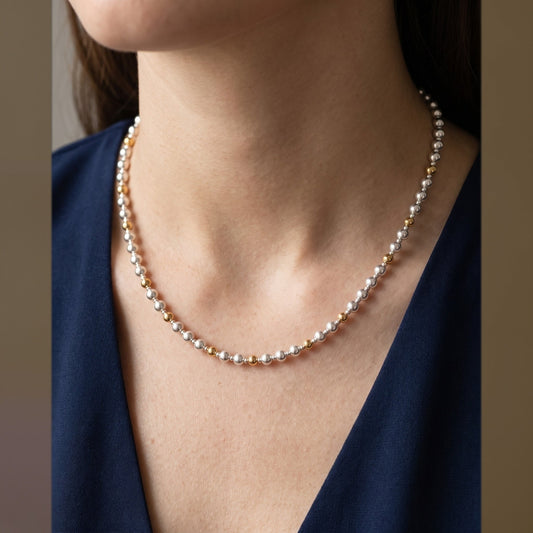
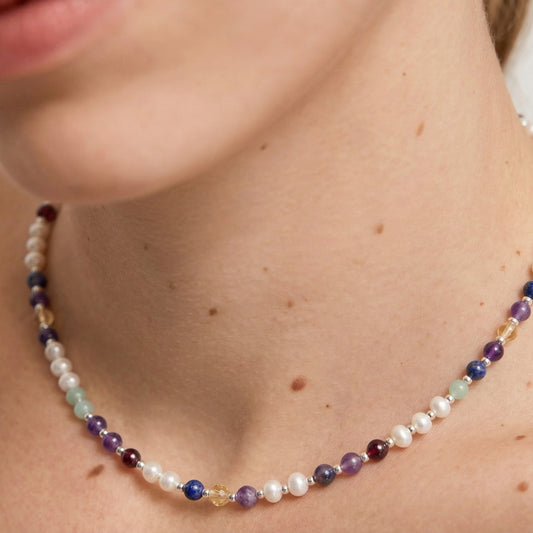
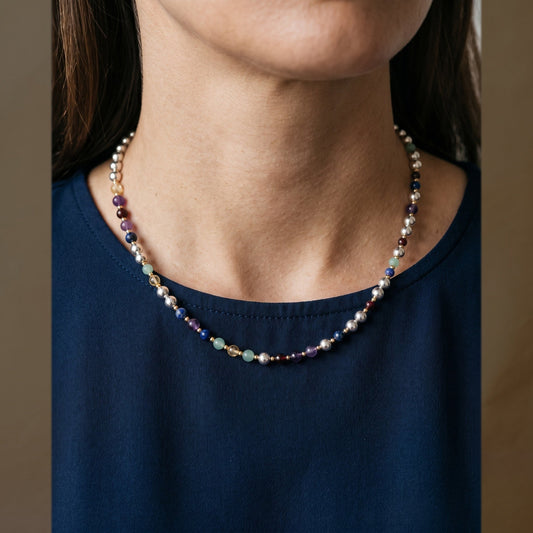
Once the laboratory has two values for each marker, the piece takes shape. Every value becomes a stone in the colour of the dye that tagged its marker. Then the jeweller places each stone along the strand by fragment size, from smallest to largest. Our partner jeweller in Birmingham's Jewellery Quarter strings the strand by hand. The signed DNA Profile Certificate then goes in the box on top. Our page on how DesigNA works walks through each step.
The lightest way to start: the Silver Clasp DNA Profile Bracelet
Start small. The Silver Clasp DNA Profile Bracelet, £179, lets you try the whole process before committing to a necklace. It is our entry bracelet. Fine 2mm stones in turquoise, carnelian, citrine, amethyst and amazonite sit between 2mm spheres of 925 sterling silver. A silver clasp and extender finish it. Bracelets start at £179, so it is also the lightest price in the range.
The kit arrives in 2 to 3 working days with free UK tracked delivery. Take the swab, post it back, and the laboratory reads your markers. Then the jeweller makes the bracelet in 2 to 3 weeks from the day the laboratory has your swab. It arrives by free tracked delivery too.
Frequently asked questions
How much DNA is in a cheek swab?
Enough, with room to spare. Every cell from the inside of your cheek carries a full copy of your DNA. The laboratory needs only a tiny amount of it to read the 23 identity markers. A gentle swab for under two minutes collects plenty.
Why not use blood?
Because a cheek swab gives the laboratory the same DNA without a needle, a nurse or a clinic. You take it yourself at home, seal it and post it back in the prepaid envelope.
Can I swab someone else?
No, not another adult. An adult always takes their own swab, with their own consent. Analysing an adult's DNA without consent is an offence under the Human Tissue Act 2004. A child's piece needs written consent from a parent or guardian first.
What happens to my swab after the laboratory reads it?
The laboratory destroys the sample once it has read the 23 markers. We delete the marker data after your piece arrives. You can also ask us to delete it sooner by emailing sales@mydesigna.co.uk.
Does the piece contain my DNA?
No. It carries the pattern of your profile as coloured stones along the strand. The DNA itself never leaves the laboratory, and the sample no longer exists once the profile does.
Ready to take the first two minutes? Explore the full DesigNA collection.
Your genetic code, profiled from a simple cheek swab and handcrafted into the exact DesigNA necklace. No two are ever the same.
Shop the collection