Newborn genome sequencing is one of the biggest genetics stories in the UK right now. The Generation Study, run by Genomics England with the NHS, is sequencing the whole genome of 100,000 newborn babies. It looks for more than 200 rare conditions. By August 2026 it had recruited more than 85,000 babies. People sometimes ask us whether a DesigNA piece involves anything like that. It does not, and the difference is worth explaining. So this post sets out what a whole genome reads, what a 23 marker profile reads, and why the two are almost opposites.
What newborn genome sequencing reads
The Generation Study takes a blood sample shortly after birth, usually from the umbilical cord. Parents give consent during pregnancy. The laboratory then sequences the baby's whole genome, which is the complete set of DNA, more than 3.2 billion bases long. It looks for changes in genes linked to more than 200 rare conditions. Many of those can be treated in early childhood. Around 1 percent of babies receive a "condition suspected" result, and the rest hear that no condition is suspected.
The results are real medicine. In August 2026, Genomics England reported more than 64,000 results returned so far. More than 200 of them were condition suspected findings. In one case, a baby's result led to a diagnosis for his older brother too. The study runs until March 2027, and the data sits in the National Genomic Research Library for approved researchers.
What a DesigNA profile reads
A DesigNA piece starts with a cheek swab, not blood, taken at home by the wearer. The laboratory, a UK laboratory with over 25 years in genetic testing, does not sequence the genome. Instead, it reads 23 Short Tandem Repeat markers. That is the same kind of analysis used for identity and paternity testing in the UK. Each marker has two values, one from each parent, and the machine tells the markers apart with five fluorescent dyes.
Those markers sit in stretches of DNA chosen because they vary between people, not because they do anything. NIST's STRBase holds the reference data for them. As a result, the profile says who, never what. It holds nothing about genes, health, ancestry, appearance or traits. The Generation Study reads the whole book to find a handful of medical sentences. A DesigNA profile reads 23 words chosen precisely because they carry no medical meaning. Read more in what a DNA profile can and cannot say.
Why the difference matters for a piece of jewellery
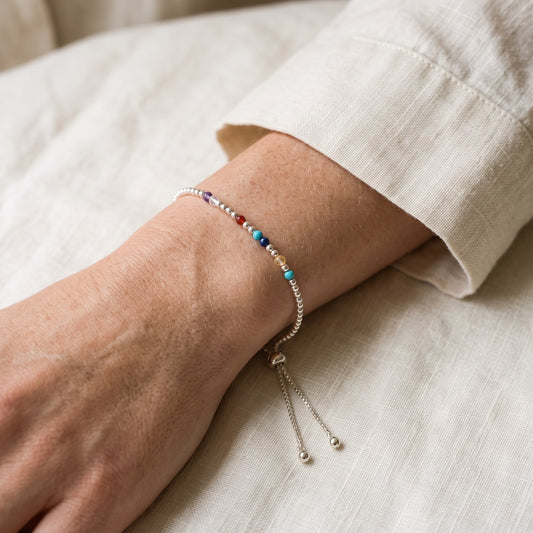
A profile that cannot say anything about health is a profile you can wear. Nobody can read a diagnosis off your wrist, because there is no diagnosis in the data. The 23 values become stones along a strand, placed by fragment size, and the certificate in the box lists them. That is the whole story the piece can tell.
The two projects also treat data in opposite ways. The Generation Study keeps genomes for research, with consent and strict access rules, because the value lies in studying them over time. We keep nothing. The laboratory destroys the sample after profiling, and we delete the marker data after the piece arrives. Genetic data is special category data under UK GDPR, so we ask for explicit consent on the form in the kit. The ICO's guidance explains why that category needs extra care.
Children, consent and a DesigNA piece
Because the Generation Study is about newborns, people ask whether a child can have a DesigNA piece. They can, with one rule. A parent or guardian with parental responsibility must give written consent first, and 16 and 17 year olds consent for themselves. An adult always takes their own swab, with their own consent. The consent page sets out exactly how it works. In short, the piece exists only because the person it describes agreed to it.
A first piece for a new arrival: the Silver Clasp DNA Profile Bracelet, £179
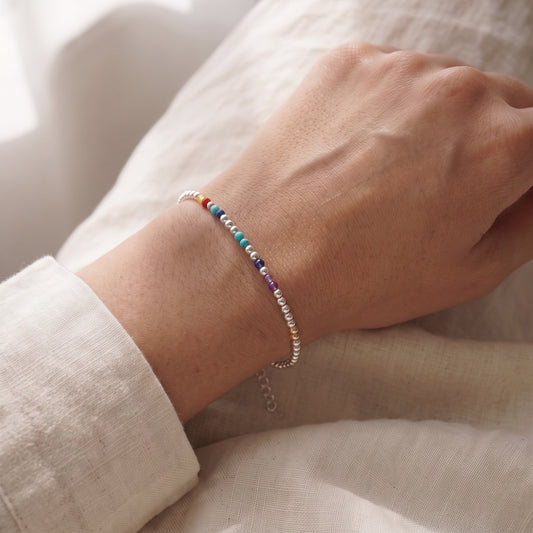
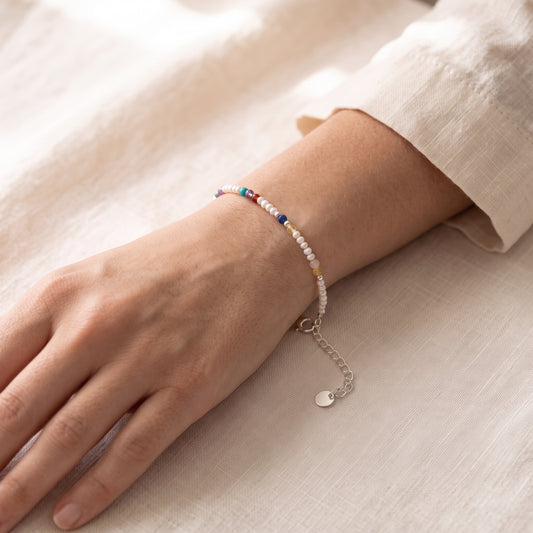
A newborn's genome is a medical record. A DesigNA piece is a keepsake of identity, and for a child or a new parent the bracelet is the natural first piece. The Silver Clasp DNA Profile Bracelet, £179, runs fine 2mm spheres in 925 hallmarked sterling silver. Between them sit 2mm stones in turquoise, carnelian, citrine, amethyst and amazonite, one colour per dye. A single lobster clasp and extender chain close it, with the oval DesigNA tag in silver.
Many new parents order it for themselves rather than the baby, as a piece to mark the year. Then the swab is their own. The kit arrives in 2 to 3 working days, the swab goes back in the prepaid envelope, and the bracelet takes 2 to 3 weeks from the day the laboratory has it. Free UK tracked delivery covers both. For Christmas, order by Sunday 15 November 2026.
Frequently asked questions
What is newborn genome sequencing?
In the Generation Study, Genomics England and the NHS sequence a newborn's whole genome from a cord blood sample, with the parents' consent. It looks for more than 200 rare conditions that can be treated early. Around 1 percent of babies receive a condition suspected result.
Does a DesigNA piece sequence my genome?
No. The laboratory reads 23 Short Tandem Repeat identity markers from a cheek swab, the same kind of analysis used for identity and paternity testing. It never reads genes, so the profile holds nothing about health.
Can a baby have a DesigNA piece?
Yes, if a parent or guardian with parental responsibility gives written consent first. Most new parents order a piece from their own swab to mark the year, and that needs only their own consent.
What happens to the data afterwards?
The laboratory destroys the sample after profiling, and we delete the marker data after the piece arrives. You can also ask for deletion at any time by emailing sales@mydesigna.co.uk. We never sell or share it.
Why does the piece use only 23 markers?
Because 23 identity markers are enough to tell one person from another, and because those markers carry no medical meaning. That makes the pattern safe to wear and show.
Ready to wear the 23 markers that say only who? Explore the full DesigNA collection.
Your genetic code, profiled from a simple cheek swab and handcrafted into the exact DesigNA necklace. No two are ever the same.
Shop the collection