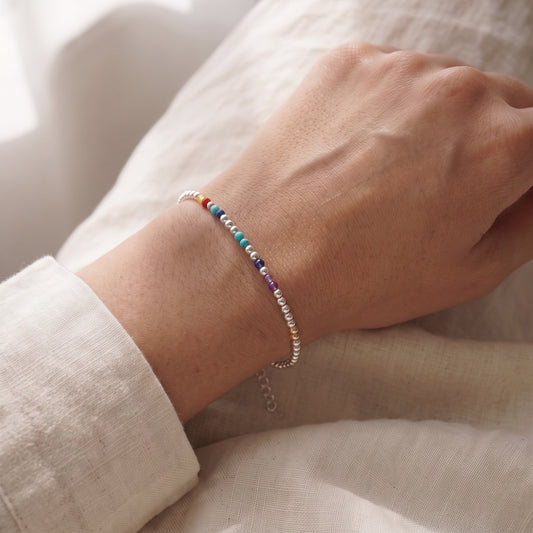
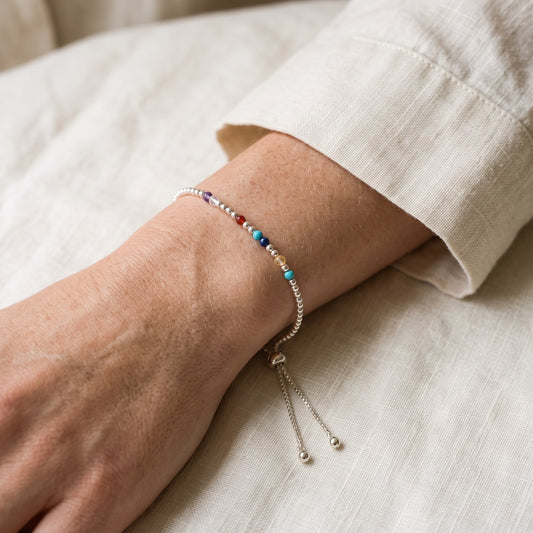
A gemstone care guide for a DesigNA piece is really a guide to seven stones. Every marker on a necklace or twisted bracelet appears as lapis lazuli, garnet, citrine, amethyst or amazonite. The fine 2mm bracelets swap in turquoise and carnelian. Each stone is natural, never lab grown or imitation, and each has its own character. So this post takes them one at a time. It says which stones shrug off daily wear and which need a little thought. Then it gives the one rule that keeps all of them looking as they did in the box.
The gemstone care guide in one rule
Warm water and a soft cloth. That is the whole routine. Wipe the strand after wearing, rinse in warm water if it needs more, dry it, and store it flat in its box. Never use an ultrasonic cleaner, because the vibration can loosen a thread and harm the softer stones. Keep perfume, hairspray and chlorine away from the strand, and put jewellery on last when you dress. Our jewellery care page covers the metals, and the posts on necklace care and bracelet care cover the pieces. Here we stay with the stones.
The quartz stones: citrine, amethyst and carnelian
First, three of the seven stones are forms of quartz, and quartz is tough. Citrine, the yellow stone, and amethyst, the purple one, are the same mineral in two colours. The Gemological Institute of America explains that traces of iron give amethyst its purple, and its citrine page covers the yellow. Both take daily wear well and clean with water and a cloth. However, keep them out of strong sunlight for long spells, because the colour in both can fade over years of direct sun.
Carnelian, the red stone on the fine bracelets, is a chalcedony, which geology.com describes as a form of quartz with a fine grain. So it is as forgiving as its cousins, and it needs the same routine. Water, cloth, and keep it away from chemicals, and it will outlast most of what you own.
The durable stone: garnet
Garnet, the red stone on necklaces and twisted bracelets, is a hard stone with a long history in everyday jewellery. GIA's garnet page describes the family. So it resists scratching in normal wear and cleans with warm water and a soft cloth. The only care it needs is the general rule. No ultrasonic cleaners, and no knocks against hard surfaces, which is good advice for any strand.
The softer stones: lapis lazuli, amazonite and turquoise
Next, these three ask for a little more care, and the reason is the same for each. They are softer than quartz, and two of them are porous. Lapis lazuli, the blue stone on necklaces and twisted bracelets, is a rock rather than a single mineral, which geology.com explains in full. It takes a lovely polish but dislikes chemicals, so keep perfume and cleaning products well away, and wipe it rather than soaking it.
Amazonite, the green stone, is a feldspar, and geology.com's amazonite page describes its colour and cleavage. It can chip on a hard knock, so take the strand off before anything that risks a blow. Turquoise, the blue stone on the fine 2mm bracelets, is the most porous of the seven. GIA's turquoise page explains why oils, perfume and even skin creams can dull it over time. So put a turquoise bracelet on last, after creams and scent, and wipe it after wearing.
Pearls, which are not stones
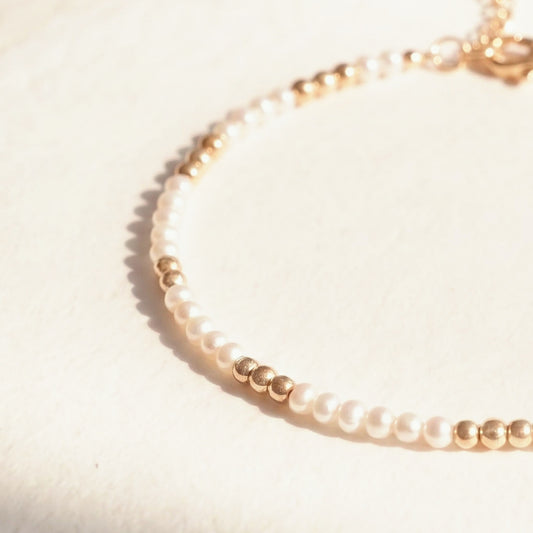
On the pearl pieces, genuine freshwater pearls hold the spaces between the stones. Because they are organic, they need their own care, and GIA's pearl page explains how they form. Pearls dislike acid, so perfume and chlorine are the two things to keep away. Wipe them after wearing and store the piece flat. Slightly off round pearls are natural and need no special treatment. Read freshwater pearls on a DNA necklace for how they grow.
Why the stones are set and never swapped
People sometimes ask whether a softer stone could be swapped for a harder one. It cannot, because the stones are the reading. The laboratory tags 23 markers in five fluorescent dyes, and each dye has one stone. On necklaces and twisted bracelets that is lapis lazuli for blue, garnet for red, citrine for yellow, amethyst for purple and amazonite for green. On the fine 2mm bracelets, turquoise takes blue and carnelian takes red, because they hold their colour better at that size. Change a stone and the strand stops matching the certificate. So we chose the set with care, and we ask you to care for it in return. Our page on semi precious stones shows each one up close.
The piece with the most stones to care for: the Pearl Clasp DNA Profile Bracelet, £199
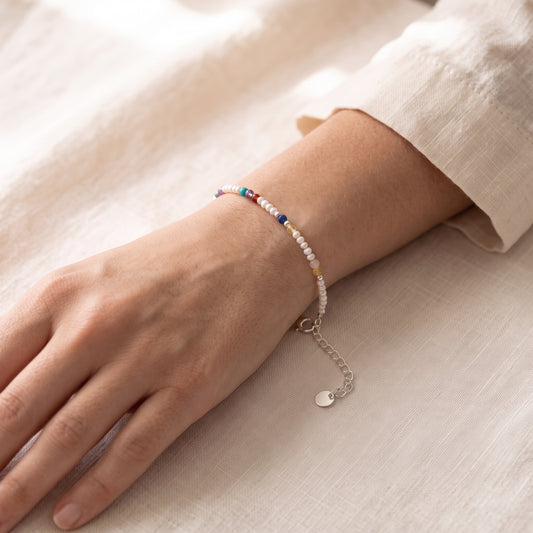
The Pearl Clasp DNA Profile Bracelet, £199, brings together pearls and the fine stone palette in one strand. Genuine 2mm freshwater pearls hold the spaces, and 2mm stones in turquoise, carnelian, citrine, amethyst and amazonite mark every value in the order fragment size places them. There are no metal spheres between the pearls and the stones. It closes with one lobster clasp and one extender, with the oval DesigNA tag in silver. Put it on last, wipe it after wearing, and it will keep its colour for years.
The kit arrives in 2 to 3 working days. The wearer takes their own cheek swab at home and posts it back in the prepaid envelope. Then the bracelet takes 2 to 3 weeks from the day the laboratory has the swab. Free UK tracked delivery covers both, and every piece carries a six month warranty.
Frequently asked questions
How do I clean the stones on a DesigNA piece?
Warm water and a soft cloth, then dry it and store it flat in the box. Never use an ultrasonic cleaner, and keep perfume, hairspray and chlorine away from the strand.
Which stones need the most care?
Turquoise, lapis lazuli and amazonite. Turquoise and lapis are porous, so keep creams and scent off them. Amazonite can chip on a hard knock, so take the piece off before rough work.
Can amethyst or citrine fade?
Over years of strong direct sunlight, the colour in both can fade. Daily wear is fine, but store the piece in its box rather than on a sunny windowsill.
Are the pearls real?
Yes. Genuine freshwater pearls, slightly off round as nature makes them. Keep perfume and chlorine away and wipe them after wearing.
Can I swap a stone for a different one?
No. Each stone stands for one of the five laboratory dyes, so the set never changes and the strand matches the certificate. Changing a stone would break that match.
Ready to choose your stones? Explore the full DesigNA collection.
Your genetic code, profiled from a simple cheek swab and handcrafted into the exact DesigNA necklace. No two are ever the same.
Shop the collection