The optogenetics Nobel Prize went to three scientists who learned to switch nerve cells on and off with light. Stockholm announced it on Monday 5 October 2026. It is one of those discoveries that sounds like science fiction, yet it is now ordinary laboratory practice. Light also sits at the heart of a DesigNA piece, because the machine that reads your 23 markers reads them by colour. So this post explains what the laureates did and how light reads a DNA profile. Then it explains why the two are related in spirit and completely different in practice.
What the optogenetics Nobel Prize rewarded
According to STAT's report, the Karolinska Institutet awarded the 2026 Nobel Prize in Physiology or Medicine to Karl Deisseroth of Stanford University and the Howard Hughes Medical Institute, Peter Hegemann of Humboldt University in Berlin, and Georg Nagel of the University of Würzburg. The citation is for their discoveries concerning light gated ion channels and optogenetics.
In fact, the story began with a question about pond life. Hegemann asked how the single celled green alga Chlamydomonas swims towards light. With Nagel, he found the answer in channelrhodopsin. It is a protein in the cell membrane that opens a channel the moment light hits it. Then, in 2005, Deisseroth's group put the gene for that protein into rat nerve cells. From that point, a flash of blue light could trigger a nerve signal in a living brain. Scientists could at last ask which cells do what, one cell type at a time.
How light reads a DNA profile
A DesigNA profile never goes near a nerve cell, and nobody changes a gene in your sample. However, light does the reading. The laboratory, a UK laboratory with over 25 years in genetic testing, copies 23 Short Tandem Repeat markers from your cheek swab. Then it tags them with five fluorescent dyes. The machine then separates the fragments by size, shines light on them, and records the colour and position of each one. Wellcome's yourgenome describes the result as a series of coloured peaks.
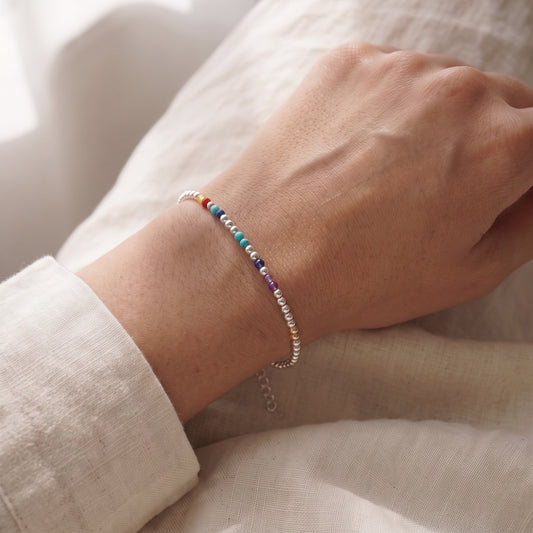
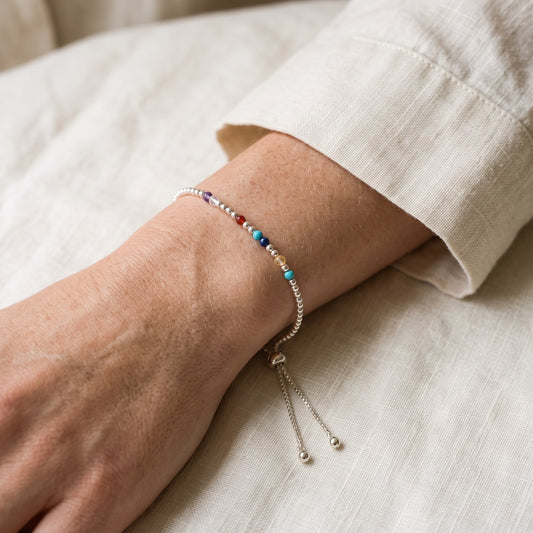
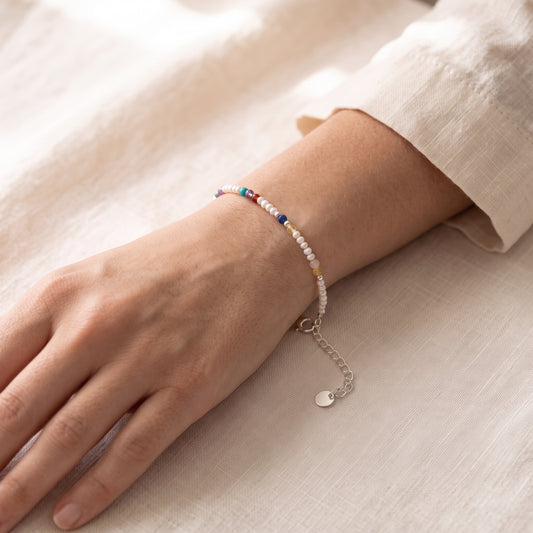
Each dye marks a group of markers, so the machine can tell them apart. For example, blue marks one group and purple another. Blue, green, yellow, red and purple. In turn, that is why the five stones on a DesigNA piece are five colours. Lapis lazuli for blue, garnet for red, citrine for yellow, amethyst for purple and amazonite for green. In short, the stones are the dyes in solid form, each one placed along the strand by fragment size. Our post on the five dye colours of a DNA profile explains the palette, and the science walks through the reading.
Related in spirit, different in practice
The two stories share a lesson. Both grew out of curiosity about something small. In one case, an alga's taste for sunlight, and in the other, the way short repeats vary between people. Both turned light into a way of reading living things. Beyond that, they part company.
Optogenetics changes cells. Scientists add a gene so that light can control a neuron. The point is to study, and perhaps one day to treat, the brain. A DNA profile changes nothing. The laboratory copies 23 markers, reads them, and destroys the sample after profiling. The markers sit in stretches of DNA chosen because they vary between people. They hold nothing about the brain, health, ancestry or traits. So a profile says who, never what, and that is the whole reason it can become a necklace. What a DNA profile can and cannot say covers the limits in full.
Why the colour is the point
Because of that, people sometimes ask whether the stones could be any colour. In one sense, yes, a jeweller can string anything. In the sense that matters, no. The colours on a DesigNA piece are the colours of the reading. Every stone stands for a dye, and every dye marks a set of markers the laboratory can see under light. Change the colours and the piece stops being a record. Keep them and every stone has a line on the certificate, with its dye channel named beside it. That link keeps the pattern honest, and it is why we fix the palette instead of offering a choice.
The piece that catches the light: the Silver and Gold Pattern DNA Profile Necklace, £279
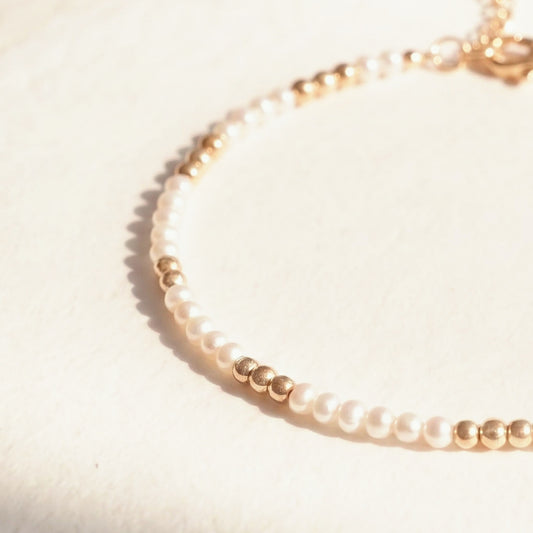
For a post about light, the piece to choose is the one that plays with it most. The Silver and Gold Pattern DNA Profile Necklace, £279, carries no coloured stones. Instead, a 4mm gold filled sphere sits at every marker position among polished 925 sterling silver spheres. So the pattern shows as warm against cool as the strand moves. The identity lives in where the gold falls, which is exactly where the fragment sizes put it. Choose 16, 18 or 20 inches, each with a 2 inch extender. A single clasp and the oval DesigNA tag in gold close it.
The kit arrives in 2 to 3 working days. The wearer takes their own cheek swab at home and posts it back in the prepaid envelope. Then the necklace takes 2 to 3 weeks from the day the laboratory has the swab. Free UK tracked delivery covers both.
Frequently asked questions
Who won the optogenetics Nobel Prize?
Karl Deisseroth, Peter Hegemann and Georg Nagel received the 2026 Nobel Prize in Physiology or Medicine on 5 October 2026. The citation is for their discoveries concerning light gated ion channels and optogenetics.
What is optogenetics?
A method that uses light to switch particular nerve cells on or off. It relies on channelrhodopsin, a light sensitive protein first found in a green alga. Scientists add it to the cells they want to control.
Does a DesigNA piece involve optogenetics?
No. Nobody changes a gene in your sample. The laboratory copies 23 identity markers, tags them with fluorescent dyes, reads them under light, and destroys the sample after profiling.
Why are the stones five colours?
Because the laboratory tags the markers in five fluorescent dyes, blue, green, yellow, red and purple, and each stone stands for one dye. The colours are the reading, so we fix them rather than offer a choice.
Can the profile say anything about my brain or health?
No. Identity markers sit in stretches of DNA chosen because they vary between people, so they hold nothing about health, the brain, ancestry or traits.
Ready to wear the reading light made? Explore the full DesigNA collection.
Your genetic code, profiled from a simple cheek swab and handcrafted into the exact DesigNA necklace. No two are ever the same.
Shop the collection