The 925 stamp meaning is a question we get from people holding a new piece for the first time. Turn a DesigNA necklace or bracelet to the clasp end and you find two small marks. One is a small disc, stamped, on the end of the extender chain. The other is an oval tag with the DesigNA helix. Neither carries any part of your profile. However, both tell you something about the piece. So this post explains what each mark means and why the tag is silver on some pieces and gold on others. It also explains why there is never more than one of either.
The 925 stamp meaning
The small disc on the end of the extender chain carries the number 925. In short, it means sterling silver, an alloy that is 92.5 percent silver by weight, with the rest usually copper for strength. Pure silver is too soft for a clasp or a chain. So sterling is the standard for everyday jewellery. The UK hallmarking guidance explains how fineness marks like 925 work. Also, the Hallmarking Act 1973 requires a hallmark on silver above set weights.
On our silver pieces, 925 hallmarked sterling silver runs through the whole strand, from the spheres or batons to the spacers, the clasp and the extender. So the disc is a small promise about everything behind it. Our post on hallmarked silver and gold covers the marks in more detail, including the 9ct gold on the Gold DNA Profile Necklace.
What the oval tag means
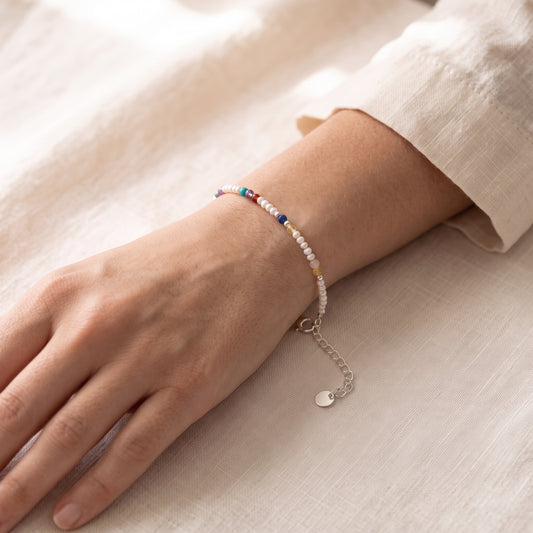
Next, the oval tag, which hangs at the clasp end and carries the DesigNA double helix. It is the maker's mark, in the sense a signature is. On silver pieces the tag is silver. On gold pieces, including the "and gold" and pattern pieces and the Gold DNA Profile Necklace, the tag is gold. Also, the tag has no engraving beyond the helix. There is no name, no date and no reading on it. After all, a DesigNA piece carries its meaning in the pattern, not in words.
Because the strand runs from the extender towards the clasp, the tag sits beside the last stone. On every DesigNA piece set with stones, that last stone is Penta D in amethyst. So the clasp end carries the final marker, the clasp and the tag together. Read why the last stone is always amethyst for the order.
Why there is only one of each
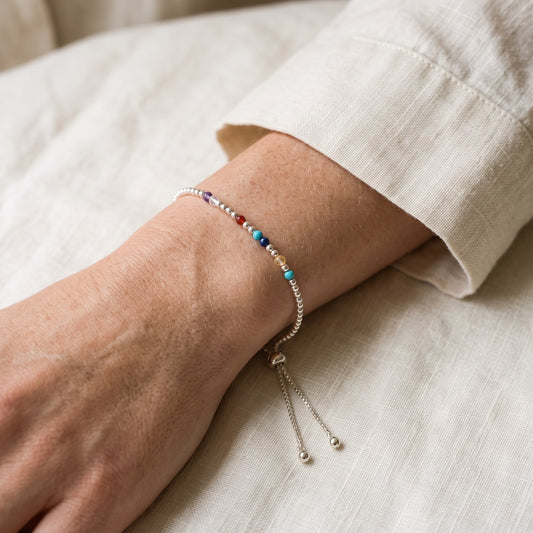
Every necklace and bracelet has one lobster clasp, one extender chain, one disc and one tag, never two. On a necklace the extender chain is 2 inches, which turns each length into a range. The disc marks its end. The tag hangs at the clasp end. A spider bracelet is the exception, because it uses a silver slider instead of a clasp. Even so, it carries a single tag.
That restraint is deliberate, because the stones and the spaces between them are the piece. Anything else at the clasp end would compete with the pattern. So we keep it to the two marks, one for the metal and one for the maker. Our post on inside the DesigNA box shows how the piece arrives.
Silver, gold and gold filled
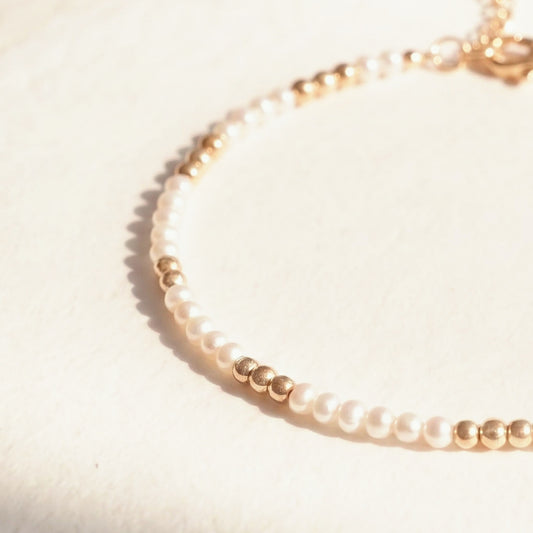
The marks also tell you which metal family a piece belongs to. For example, silver pieces carry a silver tag and a 925 disc. The Gold DNA Profile Necklace carries 9ct hallmarked gold batons and a 9ct clasp, with a gold tag. The "and gold" and pattern pieces use gold filled metal for the spheres, spacers, accents and extenders. Gold filled means a thick layer of gold bonded to a base metal core, far thicker than plating. Their tag is gold too. The Silver Sphere Gold Accent necklace is the one sphere piece with a 9ct gold clasp. Gold filled vs gold plated explains why we use gold filled for parts that touch skin all day.
Looking after the marks
Finally, the disc and the tag need no special care beyond the rest of the piece. Warm water and a soft cloth, no ultrasonic cleaners, and store the piece flat in its box. Sterling silver can dull with time. However, that is tarnish rather than damage, and a soft cloth brings it back. Jewellery care covers each metal.
The Silver Clasp DNA Profile Bracelet, £179
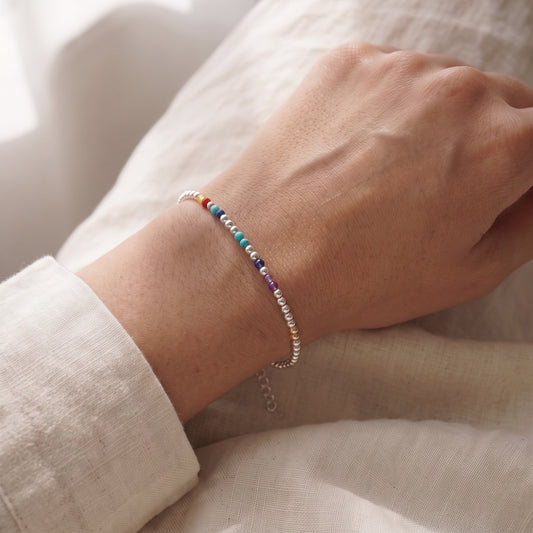
The piece that shows both marks most plainly is the Silver Clasp DNA Profile Bracelet, £179. Fine 2mm polished spheres in 925 hallmarked sterling silver carry the strand. At every marker position sits a 2mm stone in turquoise, carnelian, citrine, amethyst or amazonite. It closes with one lobster clasp and one extender chain ending in the stamped 925 disc. The silver oval tag hangs at the clasp end. Bracelets start at £179.
The kit arrives in 2 to 3 working days. The wearer takes their own cheek swab at home and posts it back in the prepaid envelope. Then the bracelet takes 2 to 3 weeks from the day the laboratory has the swab. Free UK tracked delivery covers both. For Christmas, order by Sunday 15 November 2026.
Frequently asked questions
What does the 925 stamp mean?
Sterling silver, an alloy that is 92.5 percent silver by weight. On a DesigNA piece the stamped disc sits on the end of the extender chain. The whole silver strand carries the same 925 hallmarked sterling silver.
What is the oval tag?
The DesigNA maker's mark, carrying the double helix. It is silver on silver pieces and gold on gold pieces. Also, it hangs at the clasp end beside the last stone.
Is anything engraved on the tag?
Only the helix. There is no name, date or reading on any DesigNA piece, since the pattern of stones carries the meaning.
Why is there only one tag and one disc?
Every piece has one clasp, one extender, one disc and one tag, so nothing competes with the pattern. Spider bracelets use a slider instead of a clasp and still carry a single tag.
Is the tag gold on the gold filled pieces?
Yes. The "and gold" and pattern pieces carry a gold tag, as does the Gold DNA Profile Necklace. Silver pieces carry a silver tag.
Ready to find the two marks on your own piece? Explore the full DesigNA collection.
Your genetic code, profiled from a simple cheek swab and handcrafted into the exact DesigNA necklace. No two are ever the same.
Shop the collection