Personality genes made headlines in September 2026. A study of more than a million people linked more than a thousand genetic variants to the Big Five personality traits. It is a remarkable piece of science. However, it also prompts a question we hear at DesigNA. If genes shape personality, does the strand of stones on a necklace say something about the wearer's character? The answer is no, and the reason is worth understanding. So this post explains what the study found and what it could not do. Then it explains why a 23 marker profile is a different kind of reading altogether.
What the personality genes study found
The study appeared in Nature on 2 September 2026. As The Conversation reports, 1.14 million people from 46 studies in 13 countries took part. Each contributed their DNA and their answers to personality questionnaires. In short, the Big Five are the traits psychologists use most often: openness, conscientiousness, extraversion, agreeableness and neuroticism.
Across all that data, the researchers found 1,260 genetic markers associated with the traits. Of those, 824 had never appeared in an earlier study. The size of the effect is the important part. Common genetic variants explained between 5 and 16 percent of the variation in personality. In other words, each variant nudges a trait a tiny amount, and the environment still plays a large role. Nobody can read a personality off a genome, even with a million people in the sample.
Why a DesigNA profile reads none of this
A study like that reads common variants across the whole genome, which Wellcome's yourgenome puts at more than 3.2 billion bases. A DesigNA profile reads 23 Short Tandem Repeat markers, chosen for the opposite reason. They sit in stretches of DNA that vary a great deal between people and do nothing in particular. NIST's STRBase holds the reference data for them. Also, the same kind of analysis underpins identity and paternity testing in the UK.
So the two readings do not overlap. The personality study looks at places in the genome that might influence a trait. A DesigNA profile looks at places that influence nothing, which is exactly why they work for identity. The profile says who, never what. It holds nothing about personality, health, ancestry or appearance. No future study will change that, because the markers were never about traits. Our post on what a DNA profile can and cannot say covers the full list.
The honest version of "your DNA, your character"
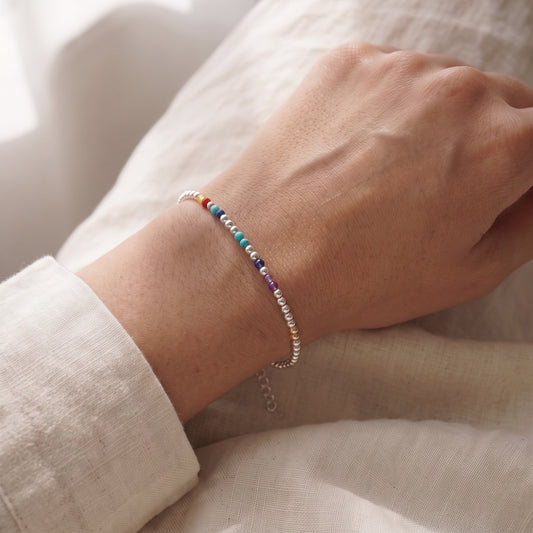
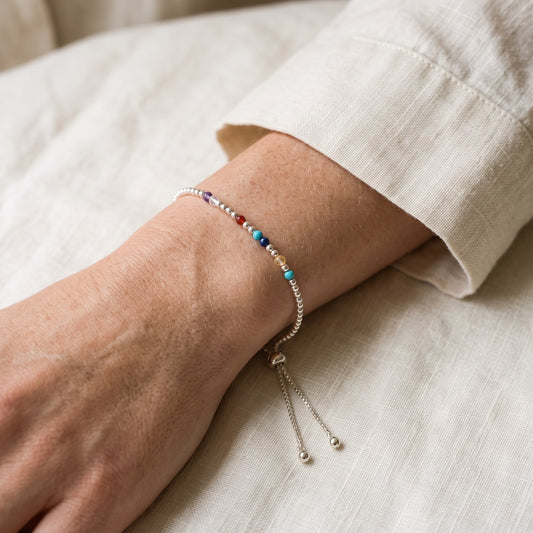
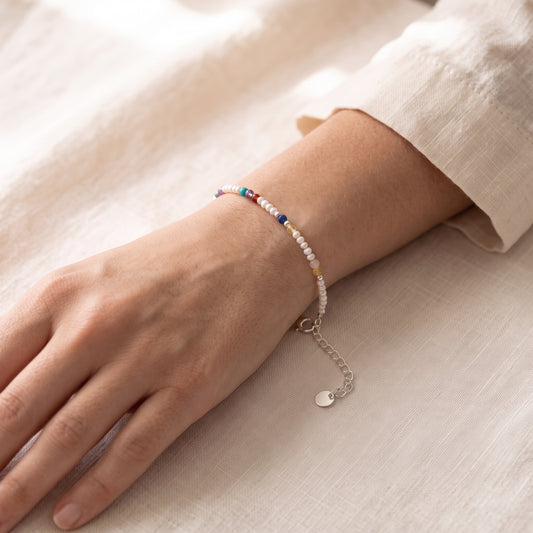
Jewellery marketing loves a leap from DNA to destiny. We try not to make it, because it is not true. A DesigNA piece does not show that someone is brave, or kind, or creative. Instead, it shows a pattern that belongs to that person alone. A UK laboratory with over 25 years in genetic testing reads it. Then every value at every marker becomes a stone in the colour of its dye, placed by fragment size. The pattern is the wearer's, but it describes their identity, not their nature.
We do give the stones traditional meanings, and we say what they are. On a traditional reading, lapis lazuli stands for honest self expression and garnet for commitment. Citrine stands for optimism, amethyst for calm and clarity, and amazonite for quiet courage. Those are beliefs people have held about stones for centuries. So we share them as beliefs, never as a claim about the wearer and never as a medical claim. Also, which stone sits where on a piece comes from the dye the laboratory used, not from anything about the person. Our page on semi precious stones explains each one.
Why that makes the piece safe to wear
A profile that cannot describe a person's character or health is a profile they can show off. Nobody can glance at a wrist and learn anything about the wearer beyond the fact that the pattern is theirs. For the same reason, we keep nothing. The laboratory destroys the sample after profiling, and we delete the marker data after the piece arrives. The certificate, which lists the readings, is the only copy. So we suggest it stays in the box. Your DNA and privacy sets out the policy in full.
The piece that says who: the Silver DNA Profile Necklace, £249
If a personality is a million tiny nudges, an identity is 23 clear readings, and the Silver DNA Profile Necklace, £249, shows them plainly. Batons in 925 hallmarked sterling silver run between the stones, with a silver spacer either side of each one. Lapis lazuli, garnet, citrine, amethyst and amazonite mark every value. The first stone is almost always D2S441 in yellow, and the last is always Penta D in amethyst at the clasp. Choose 16, 18 or 20 inches, each with a 2 inch extender.
The kit arrives in 2 to 3 working days. The wearer takes their own cheek swab at home and posts it back in the prepaid envelope. Then the necklace takes 2 to 3 weeks from the day the laboratory has the swab. Free UK tracked delivery covers both. For Christmas, order by Sunday 15 November 2026.
Frequently asked questions
Are there personality genes?
A Nature study published on 2 September 2026 found 1,260 genetic markers associated with the Big Five traits. It drew on 1.14 million people. Common variants explained between 5 and 16 percent of the variation, so genes nudge personality but do not decide it.
Does a DesigNA necklace reveal my personality?
No, because the 23 markers it reads sit in stretches of DNA chosen because they vary between people and do nothing in particular. They identify a person without describing them.
Why do the stones have meanings, then?
The meanings are traditional beliefs about the stones themselves, which we share as beliefs and never as claims about the wearer. Also, the colour at each position comes from the laboratory's dye, not from the person.
Could a future study read traits from my markers?
No. Scientists chose identity markers because they carry no trait information. In fact, that is what makes them useful for identity in the first place.
What happens to my data after the piece is made?
The laboratory destroys the sample after profiling, and we delete the marker data after the piece arrives. You can ask for deletion at any time by emailing sales@mydesigna.co.uk.
Ready to wear who you are, not what? Explore the full DesigNA collection.
Your genetic code, profiled from a simple cheek swab and handcrafted into the exact DesigNA necklace. No two are ever the same.
Shop the collection