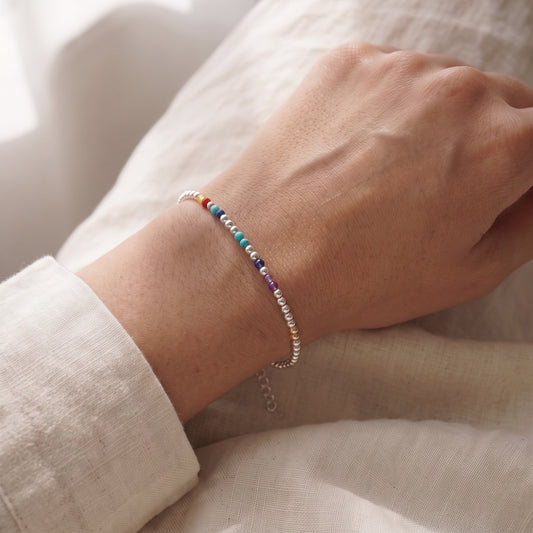
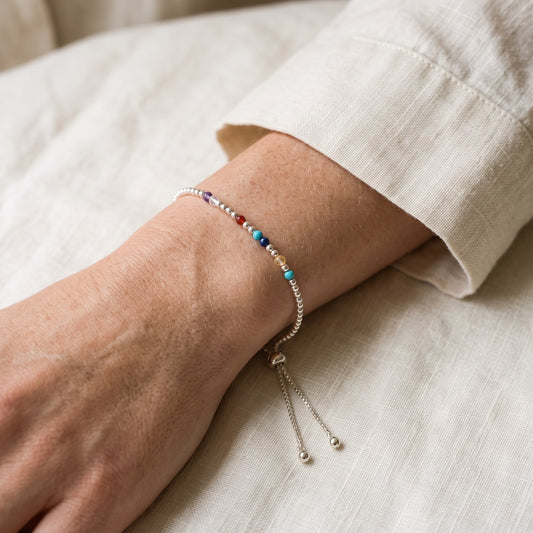
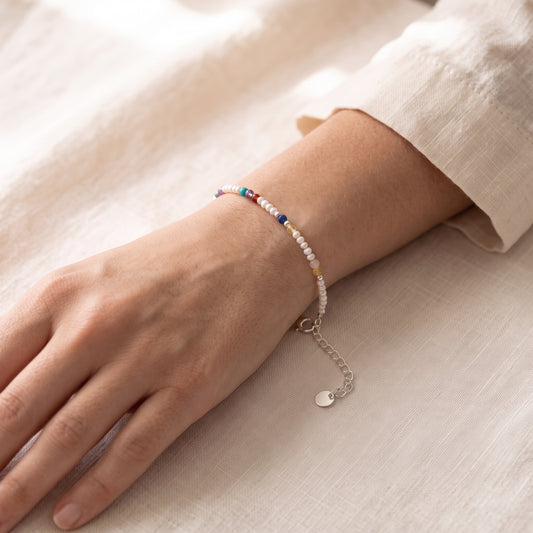
DNA markers explained in a sentence or two. That is what the "Did You Know" boxes on a DesigNA certificate are for. The certificate lists 23 markers in a table, with a dye channel, two values and two fragment sizes for each. On its own, that table is a column of numbers. So beneath it sit four short boxes, each about one marker in your profile. Since October 2026, each box also carries a small drawing of where that marker's stones sit on your piece. This post explains what a marker is and what the boxes say about the best known ones. Then it shows how to use them to read your own strand.
DNA markers explained: what a marker is
A marker, on a DesigNA certificate, is a Short Tandem Repeat. It is a short stretch of DNA, usually two to five base pairs long. It repeats a different number of times in different people. Wellcome's yourgenome explains how these repeats became the basis of modern profiling. Each marker has two values, one from each parent, and the values are repeat counts. NIST's STRBase is the reference database for them.
The laboratory, a UK laboratory with over 25 years in genetic testing, reads 23 of these markers from a cheek swab. It tags them in five fluorescent dye colours, measures the fragment sizes, and the values become stones along the strand. The markers say who, never what. They hold nothing about health, ancestry, appearance or traits. That is why a profile can go on a necklace at all.
How the four boxes are chosen
Every certificate carries four boxes, and they come from the markers in that profile. The names change from one certificate to the next, because the drawings point to real stones on the real piece. So two certificates may tell different stories, even though both profiles use the same 23 markers. The lower part of each box shows a small sketch of the strand with that marker's positions picked out. Run a finger along the piece and you can find them.
Our post on what the DNA profile certificate shows walks down the whole page. Here we stay with the boxes.
The markers the boxes most often describe
TH01 is one of the most studied markers in profiling, and it appears in almost every major profiling system in the world. vWA has been part of DNA profiling since the earliest days. FGA takes its name from the fibrinogen alpha gene it sits near. It is the most variable of the standard markers, so if any one marker captures how different people are, it is this one.
CSF1PO belongs to the original thirteen markers behind the first national DNA database in the United States. D2S441 is a newer arrival, joining international profiling panels in 2017. TPOX is one of the most stable markers known, so its reading stays the same today and decades from now. Finally, Penta D and Penta E are the only two markers in the profile built from five base pair repeats rather than four. That gives the profile extra individuality.
The marker you can always find
One box is easy to check on any piece. Penta D has the largest fragment size in the kit our laboratory uses. So it always sits last on the strand, at the clasp end, in amethyst. If your certificate carries a Penta D box, its drawing will point to the final stone. The first stone is almost always D2S441 in the yellow stone, at the extender end. Everything between the two belongs to your own values. Read why the last stone is always amethyst for the full reasoning.
Why the boxes exist
A reading you cannot read is not much of a keepsake. The boxes turn the table into something you can say aloud at the dinner table, one marker at a time. Then the drawings tie each sentence to a stone you can touch. They also keep the piece honest. Every stone has a line in the table and a place in a drawing. In short, that is what separates a DesigNA piece from a necklace with a name on it.
However, keep the certificate in the box. The table of values is genetic data, so it belongs out of public photos. The boxes and the drawn strand are yours to share. Your DNA and privacy explains the policy.
The Silver Sphere DNA Profile Necklace, £259
The piece that makes the drawings easiest to follow is the Silver Sphere DNA Profile Necklace, £259. Polished 5mm spheres in 925 hallmarked sterling silver hold the spaces, with a silver spacer either side of each stone. So every marker sits apart from its neighbours. Lapis lazuli, garnet, citrine, amethyst and amazonite mark each value. Choose 16, 18 or 20 inches, each with a 2 inch extender. Open the box, find a box on the certificate, and follow the sketch to the stone.
The kit arrives in 2 to 3 working days. The wearer takes their own cheek swab at home and posts it back in the prepaid envelope. Then the necklace takes 2 to 3 weeks from the day the laboratory has the swab. Free UK tracked delivery covers both. For Christmas, order by Sunday 15 November 2026.
Frequently asked questions
What are the Did You Know boxes on the certificate?
Four short notes beneath the table of markers, each about one marker in your profile. Since October 2026 each box also carries a small drawing showing where that marker's stones sit on your piece.
Are the boxes the same on every certificate?
No. The four come from the markers in that profile, so the names and drawings change from one certificate to the next.
What is a DNA marker?
A Short Tandem Repeat, a short stretch of DNA that repeats a different number of times in different people. Each marker has two values, one from each parent, and the values are repeat counts.
Which marker can I always find on my piece?
Penta D, the last stone at the clasp end, always in amethyst. The first stone is almost always D2S441 in yellow.
Do the markers say anything about my health?
No. Identity markers sit in stretches of DNA chosen because they vary between people, so they hold nothing about health, ancestry, appearance or traits.
Ready to read your own boxes? Explore the full DesigNA collection.
Your genetic code, profiled from a simple cheek swab and handcrafted into the exact DesigNA necklace. No two are ever the same.
Shop the collection