Home/DNA Jewellery/DNA Necklaces UK: A Buyer’s Guide to Choosing the Right One
A DNA necklace is one of the most personal things you can wear. Because the necklace carries a pattern drawn from your actual genetic code, no other piece in the world looks the same as yours. For buyers in the UK, the options have expanded considerably in recent years, and choosing the right one involves understanding what is genuinely unique and what is simply marketing.
In this guide we cover how DNA necklaces work, what separates real genetic jewellery from lookalike products, and how to choose between the DesigNA silver, gold, and pearl variants.
In this article
What Is a DNA Necklace?
A DNA necklace uses a person’s genetic code to create a visual pattern, which a jeweller then makes based on that pattern created from their real DNA Profile. First, the process starts with a cheek swab. A laboratory maps specific markers from your DNA, and the resulting data generates a pattern unique to you. Finally, that pattern becomes the design of the jewellery.
Because every person’s DNA is different, every genuine DNA necklace is different. Therefore, a true DNA necklace is not personalised in the way an engraved necklace is. It is scientifically unique, and there is no way to produce the same pattern twice.
How the Science Works
The laboratory maps your genetic profile by analysing specific regions of your DNA. These regions show the highest variability between people, which is why the resulting pattern differs for every individual. For example, scientists use similar techniques in forensic identification, where the uniqueness of these markers is a legal standard.
The laboratory produces a data set from your sample. Next, a design team translates that data into a visual form. Finally, the jeweller crafts the jewellery from that design. At DesigNA, the entire process takes place in the UK, from the laboratory analysis to the handcrafting by our partner jeweller in Birmingham.
You can read the full technical walkthrough in our post on how your DNA becomes a necklace. However, the key point is that the pattern is not decorative. It carries scientific content unique to one person.
Real DNA Necklaces vs Decorative Imitations
Not all DNA necklaces involve real DNA. For example, some products use a generic double helix or a molecular looking design without any actual genetic information. These pieces are decorative, not biological, and they are personalised in the same way as any other engraved or named jewellery.
A genuine DNA necklace requires a laboratory step. In short, the brand should ask for a biological sample, process it through a laboratory, and use the resulting data to drive the design. Because this adds real cost and complexity, it also produces a piece that carries meaning no decorative alternative can replicate.
At DesigNA, every necklace starts with a sampling kit. There is no shortcut and no generic template. As a result, each piece is the result of a real laboratory analysis, which is why each piece is different.
DesigNA: Three Variants, One Process
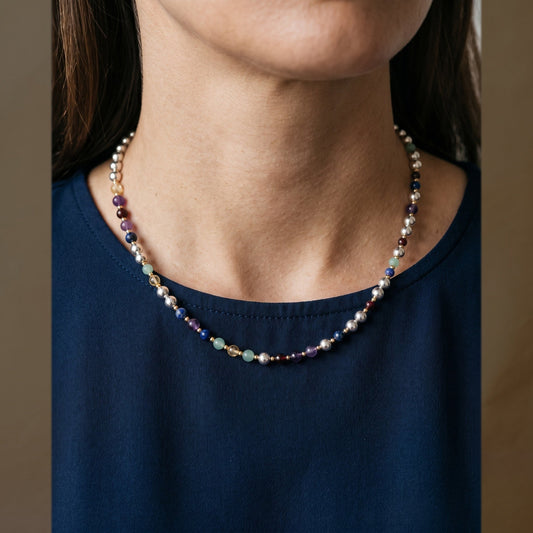
DesigNA offers three DNA necklace variants. All three use exactly the same scientific process and laboratory analysis. The difference between them is the material.
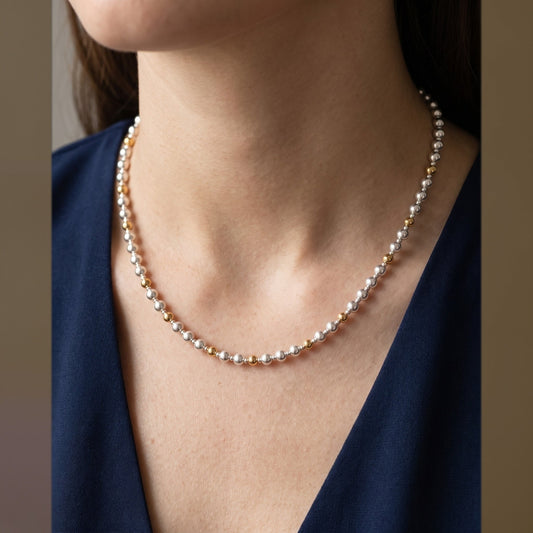
Silver. The silver DNA necklace uses 925 sterling silver throughout. It is the most versatile choice and works for everyday wear. In addition, sterling silver suits a wide range of styles and budgets, and it ages well with regular care.
Gold. The gold DNA necklace uses 9ct gold with gold filled spacers. It carries more warmth and formality than silver. As a result, it works particularly well as an anniversary gift or a statement piece for a special occasion.
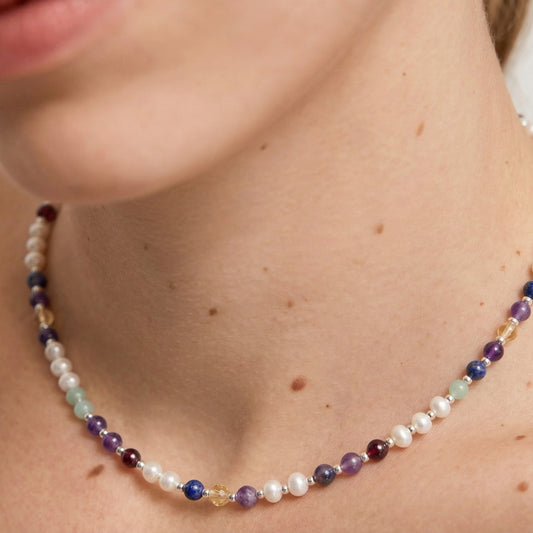
Pearl. The pearl DNA necklace strings genuine freshwater pearls between your stone markers on the strand. Because pearl has its own natural uniqueness, the combination gives you two distinct layers of individuality in a single piece. The pearl variant reads as quiet and considered, and it suits customers who want something distinctive without being conspicuous.
Silver is £249, Pearl is £275 and Gold is £699, which reflects the real cost of the process: sampling kit, laboratory analysis, design work, and UK craftsmanship.
What to Look for When Buying a DNA Necklace in the UK
A clear laboratory step. Any genuine DNA necklace should require you to provide a biological sample. If the brand does not ask for one, the product is decorative rather than scientific.
UK based process. At DesigNA, the entire process stays in the UK, from laboratory to jeweller. This matters for lead times, quality control, and data handling under UK GDPR.
Transparency about materials. Silver, gold, and pearl all behave differently over time. Therefore, a reputable brand will state the material clearly and specify the alloy. At DesigNA, silver is 925 sterling, for our gold selection the tubes and clasp are 9ct gold and we use gold filled spacers and a gold filled extender.
No rush process. A DNA necklace takes time because real laboratory analysis takes time. As a result, be cautious of brands promising very fast turnaround, because the science cannot be compressed without compromising quality. At DesigNA, the full process typically takes two to three weeks from swab return to dispatch.
Gifting a DNA Necklace
A DNA necklace works well as a gift. However, giving a DNA necklace as a gift requires a small logistical step: the sampling kit goes to the person whose DNA you are using. They complete the cheek swab and return it, and the laboratory then processes their sample.
This means the gift has a natural reveal moment. For example, you can give the kit itself first, then present the finished necklace once it arrives. The wait can become part of the experience. Because the recipient knows a laboratory is turning their DNA into jewellery, anticipation builds.
For anniversary and birthday gifts, this process actually strengthens the gesture. Moreover, the piece is not something you bought off the shelf. You chose to have it made from something irreplaceable.
Browse the full range in the DesigNA shop and use our product pages to compare the silver, gold, and pearl variants side by side.
FAQ
What is a DNA necklace?
A DNA necklace is a piece that carries a visual pattern drawn from a person’s actual genetic code. A laboratory maps markers from a cheek swab sample and generates a pattern unique to that individual. The jeweller renders that pattern into the necklace. Because no two people share the same DNA, no two genuine DNA necklaces are the same.
How much does a DNA necklace cost in the UK?
DesigNA DNA necklaces start from £249. The price covers the sampling kit, UK laboratory analysis, design translation, and the finished piece crafted by our jeweller in Birmingham. There are no additional laboratory or processing fees.
How long does a DNA necklace take to make?
From the date your sampling kit arrives at the laboratory, the full process typically takes two to three weeks. This includes laboratory analysis, design, and handcrafting. Realistic lead times reflect genuine scientific and craft work, not a production delay.
Can you give a DNA necklace as a gift?
Yes. The sampling kit goes to the person whose DNA you are using. They complete the cheek swab at home and return it. The finished necklace is then dispatched to the address you choose. You can give the kit first and then present the finished piece as a second reveal.
What is the difference between a silver, gold, and pearl DNA necklace?
All three use the same laboratory process and carry the same DNA profile. The difference is the material. Silver (925 sterling) is the most versatile. Gold (9ct with gold filled spacers) is warmer and more formal. Pearl strings genuine freshwater pearls between your stone markers, giving the piece two distinct layers of natural uniqueness.
Your genetic code, profiled from a simple cheek swab and handcrafted into the exact DesigNA necklace. No two are ever the same.
Shop the collection