Ask anyone at DesigNA what makes a piece one of one and they will say the same thing. Nobody else shares your DNA profile, so nobody else can wear your pattern. There is one honest exception, and it is a lovely one. Identical twins DNA profiles match, because the twins began as a single fertilised egg. So two pieces from identical twins would carry the same pattern of stones. This post explains why, what happens with every other relative, and how a twin pair might wear the match.
Why identical twins DNA profiles match
Identical twins come from one egg that splits in two early in development. As a result, both twins start with the same DNA. Wellcome's yourgenome site tells the story and explores how far the match goes.
For identity testing, the answer is simple. The laboratory reads 23 Short Tandem Repeat markers, and each marker has two values, one from each parent. Identical twins inherit the same two values at every marker, so their profiles match line for line. That is why a standard identity profile cannot tell identical twins apart, and it is why two DesigNA pieces from identical twins would match too.
Why everyone else's piece is different
Here is the contrast. You inherit one value at each marker from your mother and one from your father. Your sibling inherits one from each parent too, but not necessarily the same ones. So siblings share about half their values and differ in the rest. The same goes for a parent and child: about half the values match, and the pieces differ.
In jewellery terms, a mother and daughter who both order a piece get two different strands. The colours run in much the same order on both, because the markers and the dyes never change from one person to the next. However, the values differ, so the pattern between the two ends shifts. Two sisters get two different pieces. Only identical twins get the same one.
What a twin pair might choose
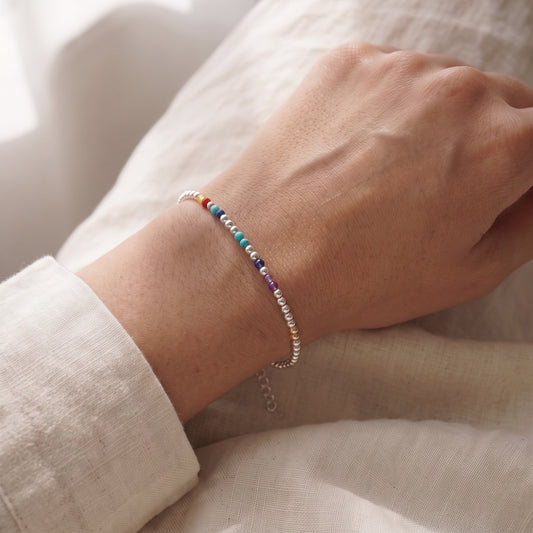
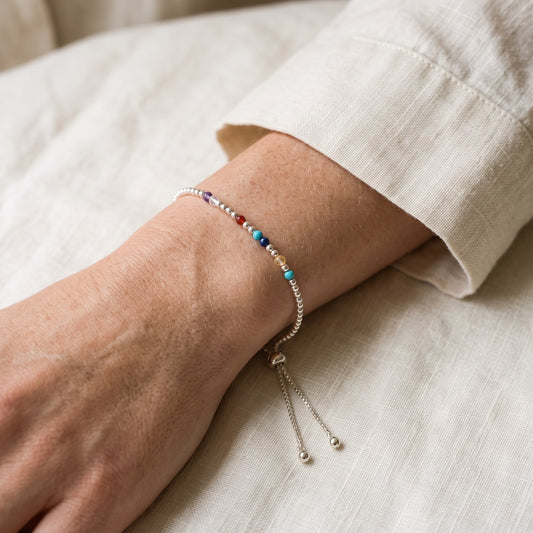
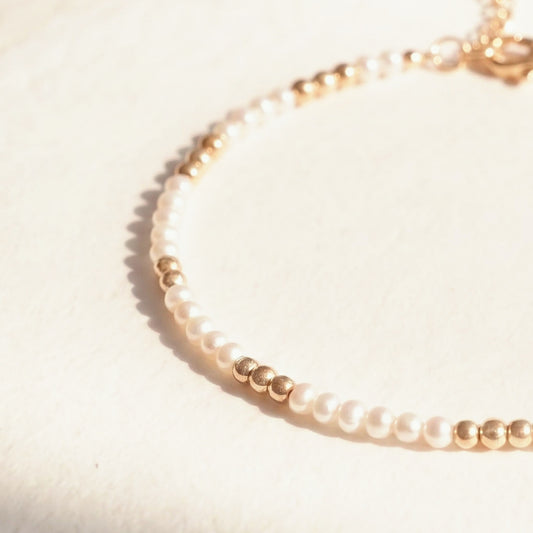
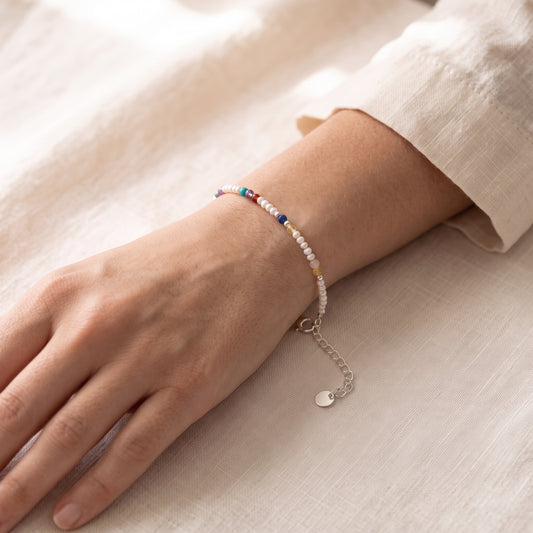
Identical twins who want matching pieces have a choice nobody else has. The pattern will match, so the metal becomes the way to tell the two apart. For example, one twin might choose the Pearl DNA Profile Necklace, £275, where the stones sit between genuine 6mm freshwater pearls finished in sterling silver. The other might choose the Silver DNA Profile Necklace, £249, where the same stones sit along 925 hallmarked sterling silver batons.
Side by side, the two strands read as one pattern in two voices. The colours fall in the same order, the amethyst sits last at the clasp on both, and only the setting differs. Alternatively, a pair could choose the same metal, so the two pieces match completely. Both routes are honest, because the profile underneath is the same.
One practical note. Each twin takes their own cheek swab and signs their own consent form, because an adult always swabs for themselves. Our consent page explains the rule in full.
What two matching certificates look like
Every DesigNA piece comes with a signed DNA Profile Certificate on top of the box. It carries the holder's name, the date, a table of the 23 markers with the dye channel and the two values, and a drawn pattern of the strand. For identical twins, the two tables would show the same values. The names and certificate numbers differ, so each certificate still belongs to one person.
That is the detail that separates a DesigNA piece from a necklace with a name on it. The certificate shows where every stone came from. If you want the longer explanation, our post on whether DNA jewellery is accurate goes deeper.
The pair to order: Pearl and Silver, second piece half price
For a twin pair, we suggest the Pearl DNA Profile Necklace, £275, and the Silver DNA Profile Necklace, £249, in one order. The same order, second piece half price offer applies automatically to the lower priced item, so the silver necklace drops to half price at checkout.
Both kits arrive in 2 to 3 working days. Each twin swabs at home, posts the swab back in the prepaid envelope, and the laboratory reads both profiles. Then our partner jeweller in Birmingham's Jewellery Quarter strings each piece by hand, in 2 to 3 weeks from the day the laboratory has the swabs. Free UK tracked delivery covers everything.
Frequently asked questions
Do identical twins have the same DNA profile?
Yes. Identical twins come from one fertilised egg, so they inherit the same two values at every one of the 23 markers. A standard identity profile cannot tell them apart.
Would two DesigNA pieces from identical twins match?
Yes, if both twins choose the same piece. The stones would sit in the same colours and the same order, because the profile is the same. Choosing different metals, such as pearl and silver, keeps the pattern and changes the setting.
Do siblings get matching DNA jewellery?
No. Siblings share about half their values and differ in the rest, so their pieces differ. The same goes for a parent and child.
Can I order both pieces in one go?
Yes. Put both necklaces in one order and the second piece half price offer applies automatically to the lower priced item. Each twin then takes their own swab from their own kit.
Does the certificate show the twin match?
Each twin receives their own signed DNA Profile Certificate with their own name and certificate number. The two marker tables would show the same values, which is the match in black and white.
Ready to order for two? Explore the full DesigNA collection.
Your genetic code, profiled from a simple cheek swab and handcrafted into the exact DesigNA necklace. No two are ever the same.
Shop the collection