Home/DNA Jewellery/Is DNA Jewellery Accurate? How Your Necklace Reflects Your Real Genetic Code In this article
- Is DNA jewellery accurate, or is it just a nice idea dressed up as science?
- How the lab reading becomes your necklace
- What "accurate" actually means here
- Why the finished piece cannot be identical to anyone else's
- Frequently asked questions
Is DNA jewellery accurate, or is it just a nice idea dressed up as science?
It is a fair question. Because people use the term "DNA jewellery" loosely online, some buyers assume the connection to their genetic code is symbolic rather than real. At DesigNA, it is not symbolic. Our lab reads your own DNA directly, and every stone on your strand traces back to a specific marker found in your sample.
This piece sits alongside our existing guides on safety and ethics. Those answer whether the process is safe, and whether we do it responsibly. This one answers a different question. Does the finished piece actually reflect your DNA, or not?
How the lab reading becomes your necklace
First, you take your own cheek swab at home, by yourself, with your own consent. Analysing someone's DNA without their consent is a criminal offence under the Human Tissue Act 2004, so we never suggest sampling on someone else's behalf, even as a surprise gift. However, if you are buying for someone, you are welcome to order and post the kit. The swab itself always stays theirs to take.
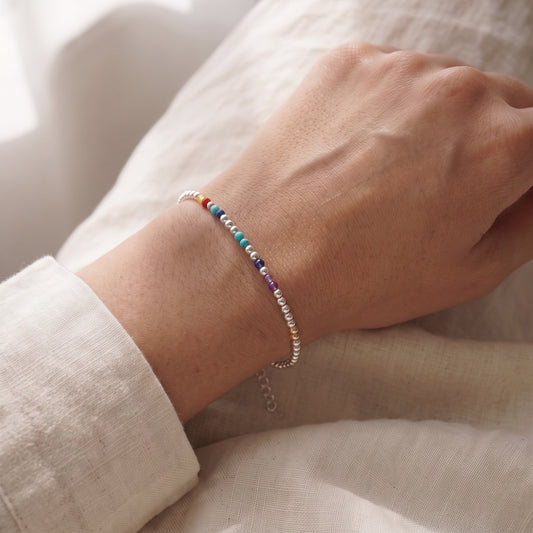
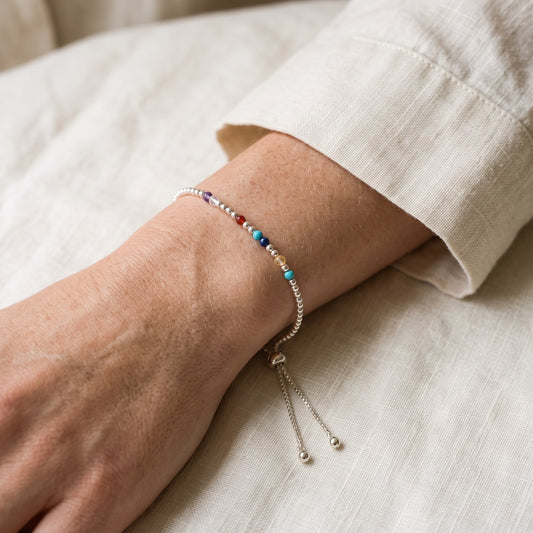
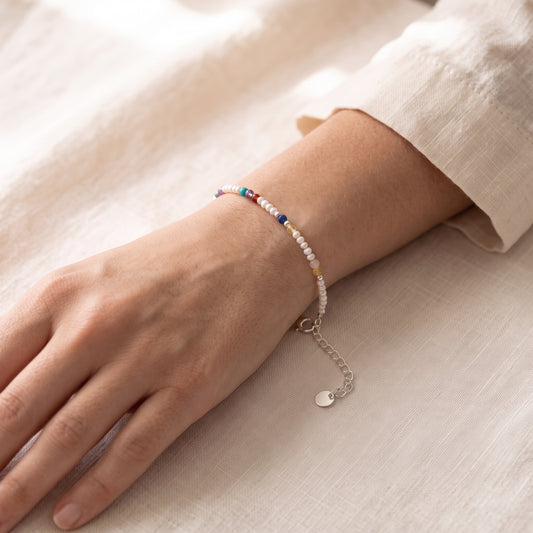
Next, your sample reaches the lab, which reads 23 DNA markers unique to you. As a result, no two customers get the same sequence, because no two people share the same DNA. Each marker then becomes a stone, in the exact order the lab found it, drawn from our set palette of five stones: Lapis Lazuli, Garnet, Citrine, Amethyst and Amazonite. We never decorate or randomise that order ourselves. It stays a direct, one to one translation of the lab's findings.
From there, our partner jeweller in Birmingham strings the strand by hand, alternating stones with metal tubes and spheres. Therefore, the sequence on your finished piece matches the sequence the lab reported. It is never an approximation.
What "accurate" actually means here
Accuracy has two parts, so it helps to separate them. The first is scientific. Does the lab correctly read your 23 markers? This uses standard genetic profiling technology, the same broad category behind consumer DNA testing generally. For background on the underlying science, the National Human Genome Research Institute publishes a plain guide to DNA sequencing.
The second part is translation. Does your necklace correctly represent what the lab reported? This is where DesigNA controls the outcome directly. Because the stone order follows your 23 markers exactly, your piece cannot be a generic design with your name attached. We build it from your own reading, marker by marker.
For clarity, no pendant, charm, or engraving of your pattern into the metal appears anywhere in this process. Instead, the accuracy lives in the stones themselves and their order along the strand.
Why the finished piece cannot be identical to anyone else's
Because your 23 markers belong to you alone, the resulting sequence of stones is effectively impossible to replicate by chance. Two customers might choose the same metal. However, the order those colours appear in still follows each person's own DNA. In short, the personalisation is not stylistic. Instead, it is structural, built into how we make the piece.
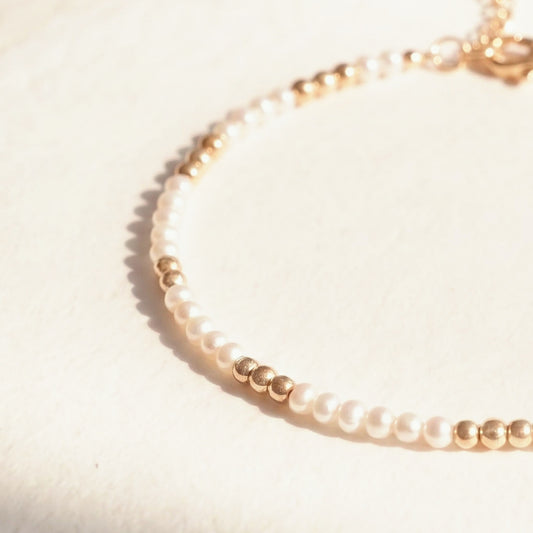
If you would like to see this in your own choice of finish, our silver, gold, and pearl necklaces all follow the identical process. Only the materials change.
Frequently asked questions
Does the necklace really use my own DNA, or a generic pattern?
It uses your own DNA. Our lab reads your sample directly. As a result, the stone sequence on your necklace follows the 23 markers it finds in that reading, and no two customers receive the same sequence.
Could I end up with the same necklace as someone else?
No. Because the stone order follows your individual DNA markers, the combination is specific to you. Because every piece uses the same five stones, what differs is the order they appear in, and that order is set by your own DNA.
Is the science behind this the same as other DNA testing?
Yes. The lab reading uses standard genetic profiling technology, the same broad category behind consumer DNA services generally. However, DesigNA does something different: we translate that reading into jewellery, marker by marker.
Can someone else provide the swab for me as a gift?
No. The person whose DNA it is must take their own swab, by themselves, with their own consent. You are welcome to order the kit and post it on their behalf. The sample itself always stays theirs to give.
Where is the necklace made?
Our partner jeweller in Birmingham strings every piece by hand, using your lab reading to set the stones in the correct order along the strand.
Ready to see your own DNA translated into a necklace? Shop the collection and choose your metal.
Your genetic code, profiled from a simple cheek swab and handcrafted into the exact DesigNA necklace. No two are ever the same.
Shop the collection