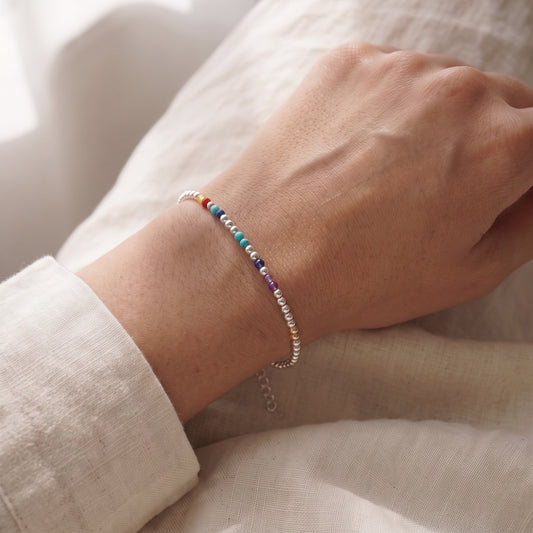
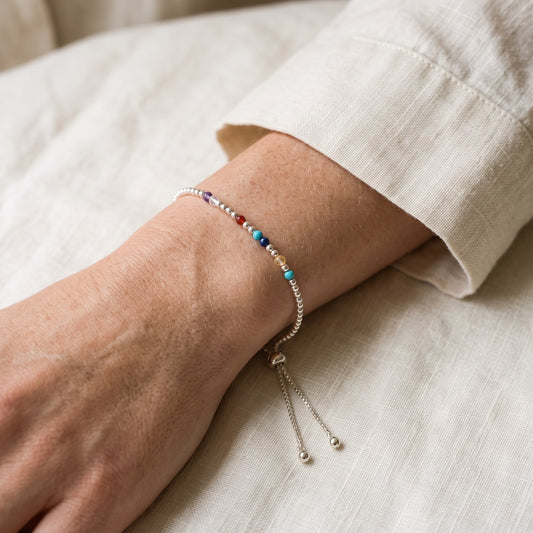
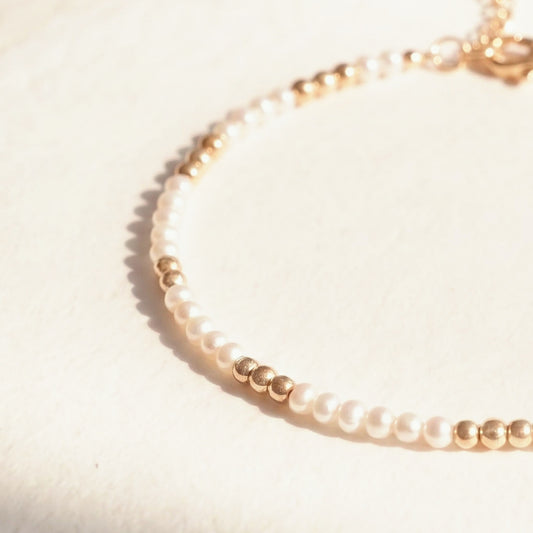
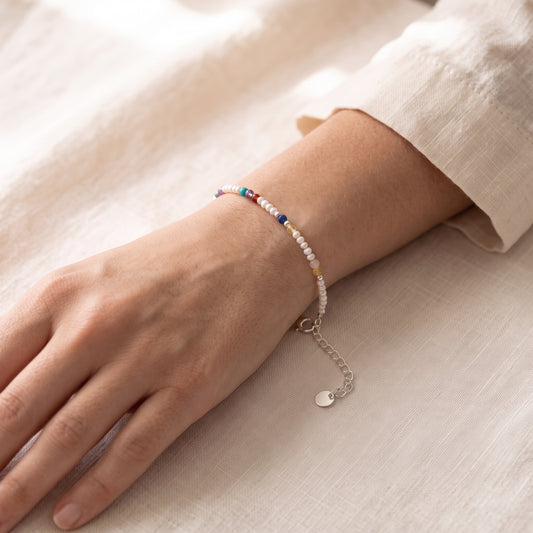
What does gold filled mean? In short, it means a thick layer of solid gold, mechanically bonded to a base metal core underneath. The gold is real. However, it does not run all the way through the piece, the way solid gold does. The layer is far thicker than gold plating. As a result, gold filled jewellery keeps its colour for years, not months.
This page gives you the plain definition first. If you want the fuller comparison against gold plating, including why plating wears through and where DesigNA uses each, read our gold filled vs gold plated article next.
The plain definition
Gold filled means a solid layer of gold, bonded under heat and pressure to a base metal core such as brass. As a result, the gold is a genuine, lasting layer, not a dip or a coating. Manufacturers measure the layer by weight. In the US, the Federal Trade Commission's Jewelry Guides set the standard: gold filled means the gold makes up at least one twentieth of the item's total weight.
So gold filled is not the same as solid gold. A solid gold piece carries the metal all the way through. It is also not the same as gold vermeil, which is a thicker plating over silver rather than a bonded layer. First, picture solid gold as gold throughout. Next, picture gold filled as a thick gold shell, bonded for the long term. Finally, picture gold plating as a thin gold coat that wears away. Gold filled sits firmly in the middle: real gold, properly bonded, built to last.
Gold filled, vermeil, plated and solid gold at a glance
| Type | What it is | How long the colour lasts |
|---|---|---|
| Solid gold (9ct and up) | Gold alloy all the way through | Permanent; it can be polished back |
| Gold filled | A thick gold layer bonded to a base metal core under heat and pressure | Years of daily wear |
| Gold vermeil | A thicker gold plating over sterling silver | Longer than plating, but it can still wear at contact points |
| Gold plated | A very thin gold coat deposited with electricity | Often months at rubbing points |
In short, gold filled gives you the look and feel of gold for years, at a fraction of the cost of solid gold.
Why the bonding matters
A mechanical bond fuses the gold layer to the core under heat and pressure. Therefore, the gold does not flake, rub off or thin out the way a plated coating does over time. Gold plating, by contrast, uses electricity to deposit a gold layer that is microscopically thin. That is why plating wears through at a clasp, or anywhere metal rubs against skin or fabric.
For jewellery worn daily, at the wrist, the neck or the clasp, that difference decides how the piece looks in a year. For example, a gold filled sphere sitting next to a silver sphere on a DesigNA pattern necklace keeps its colour. A plated equivalent would show the base metal underneath within months.
How DesigNA uses gold filled
The Gold DNA Profile Necklace uses solid 9ct hallmarked gold for its batons and clasp. Apart from those, every gold sphere, spacer, accent and extender on our DNA Profile necklaces and bracelets is gold filled, never plated, so none of them wears through to the metal underneath. The one exception in the range is the DNA Representation Pendant, which has a gold plated setting.
The UK government's hallmarking guidance notes confirm that a hallmark applies to the metal itself, not a coating. That is why gold filled parts never carry a gold hallmark, even though the gold layer itself is genuine.
What does gold filled mean on a stamp or label?
Gold filled pieces from the US often carry a small stamp that spells out the standard. For example, "1/20 14K GF" tells you the gold layer is 14 karat and makes up one twentieth of the weight. Similarly, "14/20 GF" says the same thing in shorter form: 14 karat gold, one twentieth of the weight.
The UK works differently. UK hallmarking law has no category for gold filled, so an assay office will not mark the layer as gold. Instead, honest sellers simply name it in words. That is why you will see "gold filled" written out in each DesigNA product description, rather than a stamp on the metal.
What does gold filled mean for everyday wear?
In practice, gold filled means you can wear a piece every day without worrying about it. Showering, a long day at work and the rub of a coat collar will not strip the colour, because there is no thin coat to strip. However, chlorine and harsh cleaning products can still dull any gold surface over time. So take the piece off before swimming, cleaning or applying fake tan, and it will reward you for years.
Is gold filled jewellery worth it?
For most everyday pieces, yes. First, you get real gold on every surface you see and touch, rather than a coat that fades. Second, the price stays far below solid gold of the same size, because only the outer layer is gold. Third, gold filled suits small, busy parts of a design, such as spheres and spacers, where plating would wear first.
However, solid gold still has a place. For example, it suits parts that take the most strain or that you may want to polish back over decades. That is why the Gold DNA Profile Necklace pairs 9ct gold batons and clasp with gold filled spheres. Each material goes where it performs best.
Caring for gold filled jewellery
Gold filled jewellery asks for the same simple care as sterling silver. Warm water and a soft cloth keep it clean. However, avoid an ultrasonic cleaner. Keep perfume away from the strand too, because solvents can dull the finish over time. Store the piece flat in its box after wearing, and the gold filled layer will keep its colour for years.
Frequently asked questions
What does gold filled mean on a piece of jewellery?
It means a solid, lasting layer of real gold bonded under heat and pressure to a base metal core. The gold is genuine, and the layer is far thicker than plating, so the colour lasts through years of normal wear.
Is gold filled the same as solid gold?
No. Solid gold carries the metal all the way through a piece. Gold filled, instead, carries a thick gold layer bonded over a base metal core. As a result, gold filled gives you real gold on the surface at a lower cost than a solid gold piece of the same size.
Is gold filled better than gold plated?
For daily wear, yes. Gold plating deposits a very thin gold coat that wears through at a clasp, or anywhere the piece rubs against skin. Gold filled, however, carries a far thicker, mechanically bonded layer that holds its colour for years instead of months.
Does gold filled jewellery tarnish?
Gold filled resists tarnish well, because the gold layer is thick enough to protect the base metal beneath it. As a result, warm water and a soft cloth are usually all it needs. No ultrasonic cleaner and no perfume should ever touch the strand.
Can you shower with gold filled jewellery?
Yes, everyday water will not harm it, because the gold layer is thick and bonded rather than a thin coat. However, soap film can dull the shine over time, so a quick rinse and a dry with a soft cloth keeps it bright. Take it off before swimming in chlorinated water or using harsh cleaning products.
Why does DesigNA use gold filled instead of solid gold everywhere?
Gold filled lets us put real, lasting gold at every marker position on a pattern or "and gold" piece, without the cost of a solid gold strand. Meanwhile, the Gold DNA Profile Necklace uses 9ct hallmarked gold for its batons and clasp. Each piece, therefore, uses the gold that suits its own design and price.
Ready to see gold filled on a piece built from your own DNA? Explore the full DesigNA collection.
Your genetic code, profiled from a simple cheek swab and handcrafted into the exact DesigNA necklace. No two are ever the same.
Shop the collection